
Compressed garbage trucks are widely used in the collection and transfer of household waste. Due to their compressibility advantage, they have higher transfer efficiency and occupy a high proportion in the garbage truck fleet. With the gradual deepening of waste classification, compressed garbage trucks collect, compress, and transfer the waste from sorted garbage bins, forming a relatively efficient processing flow.
The commonly mentioned compressed garbage trucks often specifically refer to rear-loading compressed garbage trucks. In fact, side-loading compressed garbage trucks are also an important branch within the category of compressed garbage trucks.
Both side-loading and rear-loading compressed garbage trucks collect garbage in the vehicle compartment, compress it, and then transport it.
As the name suggests, the most obvious difference between side-loading and rear-loading compressed garbage trucks lies in their loading methods, with one loading from the side and the other loading from the rear.
Compared to rear-loading compressed garbage trucks, side-loading compressed garbage trucks have a simpler structure, lower failure rate, more affordable cost, easier maintenance, and lower operating costs. Their compression capacity is similar to that of rear-loading compressed garbage trucks, and even surpasses them after structural optimization. Therefore, they are also very popular among users.
The disadvantage of the side-loading compressed garbage truck is that it can only load buckets. The lifting mechanism can be adapted to various specifications of garbage bins as needed, such as GB 120L and 240L plastic buckets, round iron buckets, and 660L standard buckets, but it can only load buckets.
Another disadvantage is that the bucket-hanging elevator requires a relatively high space height for lifting and dumping garbage bins, which poses certain limitations for indoor operations, especially for transferring garbage in basements.
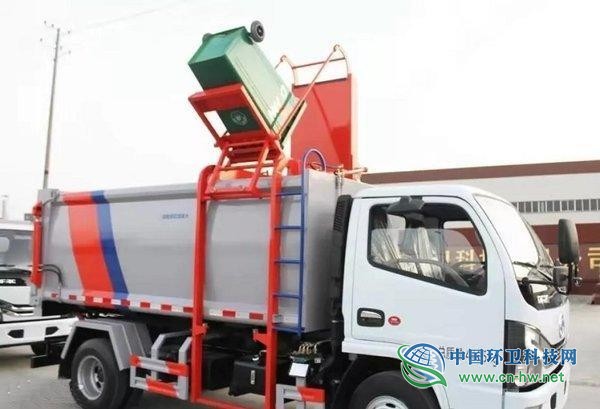
The side-loading compressed garbage truck is an improvement on the bucket-hanging garbage truck (self-loading and unloading garbage truck). Compared to the bucket-hanging garbage truck, it mainly features improved box structure, improved rear door sealing and locking methods, added built-in compressed shovels, and an additional sewage tank.
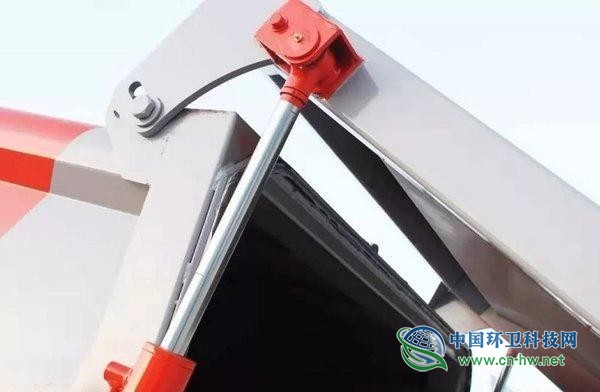
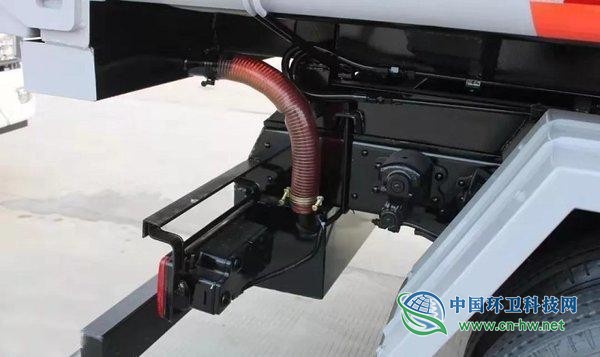
In this way, the container can withstand greater pressure, and the compression blade can compress the household waste loaded by the hanging bucket elevator. The compression blade can be equipped with full-stroke and half-stroke options, and the unloading method can be equipped with self-dumping or blade pushing options. The sewage tank can collect the sewage from the compressed household waste to avoid leakage.
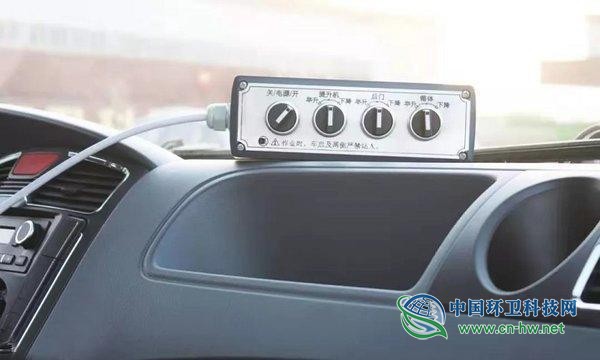
Optional electronic control operation makes the operation simpler and the labor intensity lower. You can also choose not to install the built-in compression shovel, allowing for flexibility in configuration according to personal preferences.

When loading garbage, the rear-loading compressed garbage truck uses a lifting mechanism to load the garbage into the rear hopper. A scraper and a sliding plate cooperate to press the garbage in the rear hopper into the compression box. The compression push plate inside the box compresses in both directions, achieving high compression efficiency. The entire operation process is controlled by a PLC programmable electronic controller, allowing for one-button cycling and simple operation. However, the structure is relatively more complex than that of side-loading compressed garbage trucks, and the cost is also higher.


