
How much space debris is there? How big is it?
According to data from the European Space Agency's Space Debris Office (SDO), as of December 2023, there are approximately 11500 tons of various types of space debris over 3 millimeters in orbit. Among them, there are nearly 40000 that are longer than fingers (more than 10 centimeters), about 1 million that are longer than nail covers (1 centimeter to 10 centimeters), and about 130 million that are smaller than melon seeds (less than 1 centimeter).
They are distributed on spherical shells with a diameter of over 10000 kilometers, which is 9 orders of magnitude higher than the size of space debris.
If we consider the Earth as an orange, then the size of each space fragment is equivalent to one fifty thousandth of a bacterium.
There are not many that truly have recycling value.
The significance of recycling: Kessler syndrome
The biggest significance of recycling space debris is not to use it, but to prevent it from becoming monsters, as the speed is too fast.
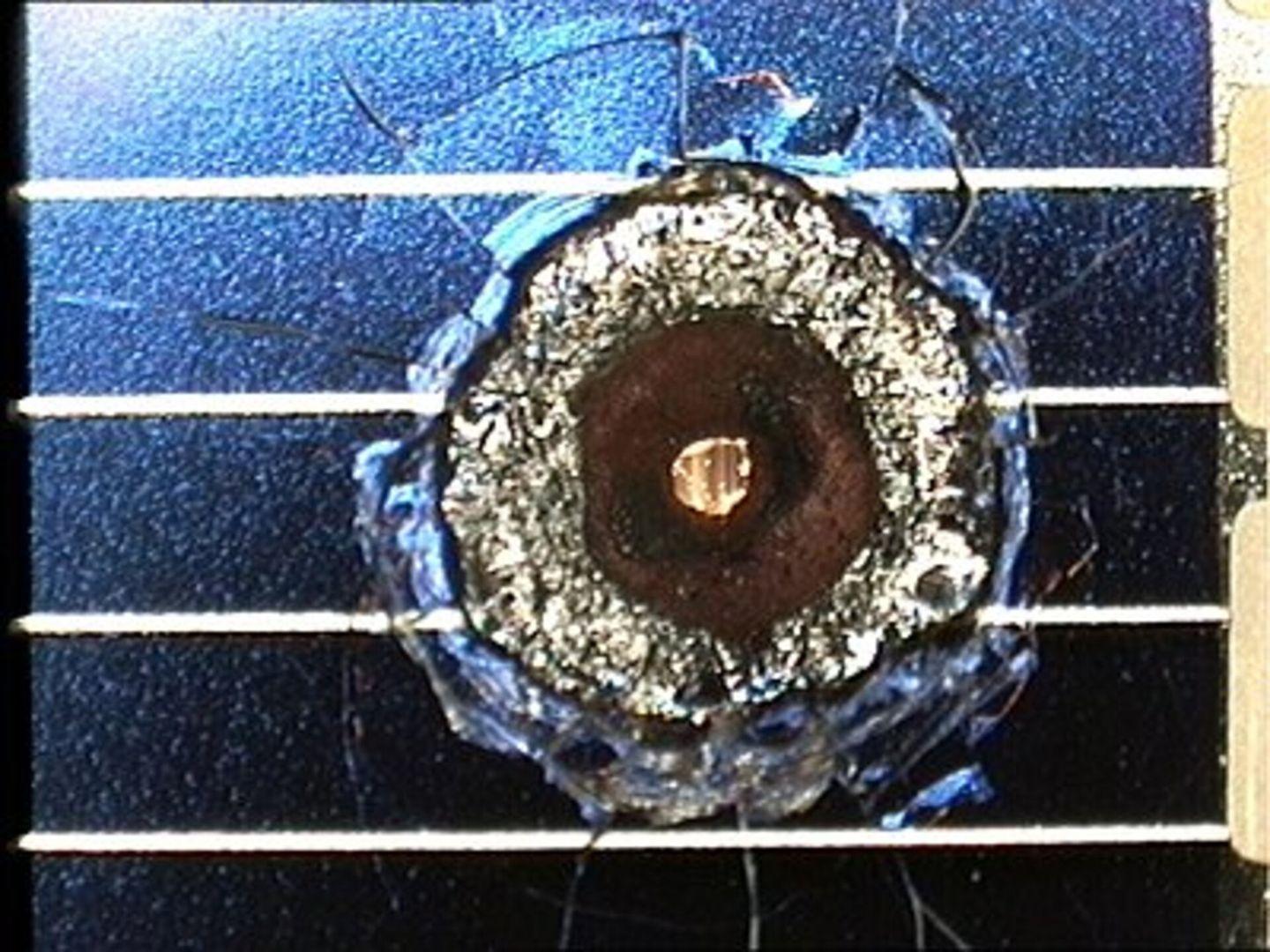
The lens of the space telescope is scratched
As the number of fragments increases, more collisions will occur. If the amount of space debris doubles, the probability of catastrophic collisions will increase by about four times.
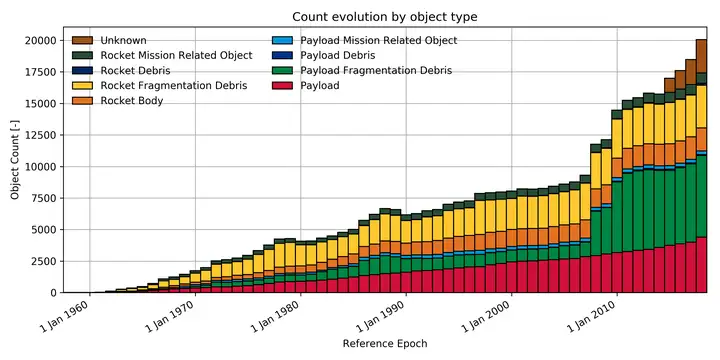
At the current pace of development, it will inevitably lead to collision accidents in a few decades. Collisions will produce more fragments, like dominoes, until the entire space debris enters the atmosphere and decreases to subcritical quantities.
This self-sustaining chain reaction, known as Kessler syndrome, is a theory proposed by American scientist Donald Kessler as early as 1978. When the amount of space debris reaches a critical point, if a satellite deviates from its orbit or is hit by a meteor, it will trigger a chain reaction, resulting in a larger number of satellites being destroyed and turned into space debris, posing a threat to the safety of spacecraft such as space stations.
According to NASA's model prediction, even if there are no new launches starting from 2006, Kessler syndrome will become a reality by 2055. Considering that the launch frequency of various countries has far exceeded that of 2006 in recent years, it is currently approaching the critical point.
What we can do is to develop recycling technologies as soon as possible, such as satellites with scissors and arms, laser brooms, robot satellites with fishing nets, large magnets, and so on.
When something becomes urgent, there will always be a moment when it becomes important.


