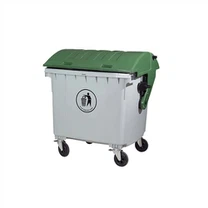



As China's 14th Five-Year Plan approaches its conclusion, all prefecture-level and above cities have largely achieved full coverage of household waste classification. However, amid systemic challenges such as subsidy cuts and nearly 40% idle capacity in the waste-to-energy sector, the solid waste industry is rapidly shifting its focus upstream-toward waste collection and transportation (C&T). Recent industry data reveals that waste C&T is undergoing a profound transformation from a "crude, bulk-transfer" model to one defined by precision, digitalization, and low-carbon operations.
Drivers: Downstream Pressure and Policy Mandates
Over the past fifteen years, China built two-thirds of the world's waste incineration power capacity. But with new projects no longer eligible for central government subsidies after 2024, and amid growing regional shortages of "waste to burn," profit margins at downstream disposal facilities have been severely squeezed. Industry consensus has emerged: plugging the leaks in unregulated waste streams and improving the economic efficiency of the collection chain have become imperatives for the solid waste sector's self-rescue. Meanwhile, the Ministry of Housing and Urban-Rural Development and other agencies have explicitly demanded a comprehensive upgrade of classified collection and transport capabilities. Against this backdrop, the systematic rollout of "classified dropping, collection, transport, and treatment" entered a true accountability phase in 2025–2026, with crude "mixed loading and mixed transport" being thoroughly eliminated.
Core Highlight: The Breakthrough of Smart & Unmanned Sanitation
On the technology and management front, "intelligentization" and "unmanned operations" have become the industry's most dazzling new trends. Led by first-tier cities like Shenzhen and Guangzhou, autonomous sanitation vehicles and smart collection networks are experiencing explosive growth.
| Evaluation Dimension | Traditional C&T Model | Smart/Unmanned C&T Model (2025–2026 Data) |
|---|---|---|
| Operating Cost | High labor and fuel costs; route planning largely experience-based | Total cost reduced by ~50%; pure unmanned operation saves 48–78% |
| Operational Efficiency | "Man looking for waste"; cleaning and transport disconnected | Integrated "sweep-transport-charge" network; efficiency gains of nearly 300% |
| Data Traceability | Hard to accurately track classification purity per site | AI vision + IoT weighing; real-time traceability of "who sorts well, who hauls more" |
Major sanitation equipment manufacturers (e.g., Infore Environment) have successively launched next-generation "swarm unmanned operation" systems and smart cloud platforms. These systems no longer focus solely on sweeping but connect the entire chain: "smart collection points → unmanned sweepers and collection trucks → transfer centers." Equipped with AI cameras and sensors, the vehicles can automatically identify waste density, edge-hugging operation, and communicate directly with back-end platforms, enabling precision collection that "tasks find people and vehicles align."
Outlook: Reconstructing the Urban Solid Waste Logistics Chain
Recent industry trends point to three major directions for the future of waste C&T:
- Fully enclosed & miniaturized vehicles: In aging urban neighborhoods and narrow alleys, traditional giant garbage trucks are being progressively replaced by electric, enclosed, low-noise micro collection trucks, resolving the nuisance of "trucks dripping stench across the street."
- "Internet + Collection" business model closure: The sector is diversifying into equipment leasing, full-outsource operations, and other new models. Companies with smart operation platforms-able to help local governments optimize fiscal spending using collection data-are demonstrating stronger competitiveness and resilience.
- Low-carbon collection and transport: With local requirements that new-energy sanitation vehicles must account for over 80% of fleets, high-energy, high-emission conventional diesel garbage trucks are rapidly exiting the stage.
Waste collection and transport is no longer a mere "hauling" role-it has become a critical data interface for urban digital governance and carbon reduction. Driven by both technology and cost-effectiveness, a cleaner, more efficient, and intelligent solid waste logistics network is being woven at an accelerating pace.