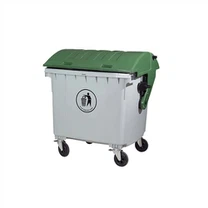
Why do people use classified plastic trash cans?
The importance and benefits of garbage classification:
1. Improve resource utilization: Through garbage classification, recyclable items such as waste paper, plastic, metal, etc. can be separated and reused, reducing the demand for new resources and lowering resource consumption. This not only saves natural resources such as trees and oil, but also reduces greenhouse gas emissions caused by the extraction and processing of these resources.
2. Reduce environmental pollution: Garbage classification can reduce the harm caused by harmful garbage to the environment and organisms, such as reducing heavy metal pollution in discarded batteries, reducing plastic pollution to soil and water bodies, and also reducing deaths caused by animal ingestion of garbage. Garbage classification can reduce the amount of landfill and incineration, thereby reducing pollution to land and water resources. Landfilling garbage can generate problems such as mosquitoes and sewage, while incineration may produce harmful gases.
3. Reduce processing costs: By sorting, the processing and transportation costs of garbage can be reduced, as different types of garbage can be processed in different ways to improve efficiency.
4. Promoting sustainable development: Garbage classification helps to achieve resource recycling, reduce the pressure of waste on the environment, and promote sustainable development of society. By reducing resource consumption and improving resource utilization, garbage classification can promote sustainable economic development.
5. Improving social civilization: Garbage classification actions can enhance public environmental awareness and promote the improvement of urban civilization. It reflects people's sense of responsibility towards the environment and is also an important indicator for measuring the level of social civilization.
The specific implementation method of garbage classification includes collecting household waste into several types according to the requirements of different treatment and disposal methods from the source. The common classification methods include four categories: recyclables, hazardous waste, kitchen waste, and other waste.
Standard for garbage classification:
Recyclable materials: including waste paper, plastic, glass, metal, fabrics, etc.
Hazardous waste: including rechargeable batteries, light tubes, discarded medicines, etc.
Kitchen waste: including household kitchen waste, kitchen waste, etc.
Other garbage: garbage that does not belong to the above three categories.

Garbage classification is being carried out vigorously, and the demand for classified garbage bins is also increasing day by day. Before garbage classification, all types of garbage, including dry, wet, kitchen, and hazardous waste, were thrown into a single trash can. It is convenient for everyone, but it increases the difficulty of garbage sorting and environmental pollution will become more serious. Implementing garbage classification can efficiently address these challenges, and sorting garbage bins is key.
There are so many materials and types of classified garbage bins, Why do people use classified plastic trash cans?
1. Environmental Protection: The plastic trash can is made of two new materials, high-density polyethylene (HDPE) or polypropylene (PP). The wheel axle and its accessories can be recycled and reused, making it more environmentally friendly.
2. Price: Compared to stainless steel or wooden trash cans, plastic trash cans have lower costs and can be stacked during transportation, saving space and shipping costs, as well as lower maintenance fees.
3. Quality: Plastic trash cans are acid and alkali resistant, corrosion-resistant, and not easily aged. The quality is very reliable, and compared to trash cans made of other materials, they are more durable and have a longer service life.
4. Color: Plastic trash cans can be customized in various colors, with bright colors that are not easily faded. No matter where it is placed, it is very eye-catching, allowing everyone to accurately put garbage into the trash can and reducing the situation of littering.
5. Hygiene: The plastic trash can with a lid design not only effectively prevents garbage from being scattered everywhere, but also reduces odor and bacterial growth.
6. Cleaning: The plastic trash can adopts a one-time injection molding process, with a smooth surface, no welds or joints, making it easy to dispose of garbage, clean, and leave no residue.
7. Capacity: Plastic trash cans come in a variety of capacities to choose from, meeting the needs of street communities, property communities, industrial parks, airports, and subway stations.
Plastic trash cans have become an essential cleaning product in people's daily lives, with significant effects in both practicality and usability. Having a plastic trash can will prevent people from littering and regulate their personal behavior, which is also crucial for protecting the ecological environment.

PGGP provides an extensive selection of classified plastic trash cans, designed to cater to diverse customer requirements. Whether customers need standard designs or customized solutions, PGGP ensures optimal functionality and adaptability. Each variant is crafted to address specific regional preferences and operational needs, making the PGGP classified plastic trash cans a reliable choice for waste management worldwide.