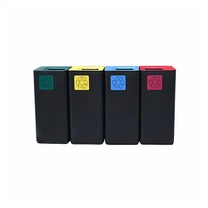
Household waste can generally be divided into four categories: recyclable waste, kitchen waste, hazardous waste, and other waste. Currently, the commonly used waste treatment methods include comprehensive utilization, sanitary landfill, incineration, and composting.
1, Recyclable waste
It mainly includes five categories: waste paper, plastic, glass, metal, and fabric
Waste paper: mainly includes newspapers, journals, books, various packaging paper, office paper, advertising paper, paper boxes, etc. However, it is important to note that tissues and toilet paper are too water-soluble and cannot be recycled.
Plastic: mainly includes various plastic bags, plastic packaging materials, disposable plastic lunch boxes and tableware, toothbrushes, cups, mineral water bottles, toothpaste covers, etc.
Glass: mainly includes various glass bottles, broken glass pieces, mirrors, light bulbs, thermoses, etc.
Metal objects: mainly including cans, cans, etc.
Fabric: mainly includes discarded clothes, tablecloths, face towels, backpacks, shoes, etc.
Through comprehensive treatment and recycling, pollution can be reduced and resources can be saved. If one ton of waste paper is recycled, 850 kilograms of paper can be made, saving 300 kilograms of wood and reducing pollution by 74% compared to equal production; Recycling 1 ton of plastic beverage bottles can earn 0. 7 tons of secondary raw materials; Every 1 ton of recycled steel can refine 0.9 tons of steel, saving 47% of costs compared to using ore smelting, reducing air pollution by 75%, and reducing water pollution and solid waste by 97%
2, Kitchen waste
This includes food waste such as leftover food, bones, vegetable roots, leaves, fruit peels, etc., which can be processed and composted on site using biotechnology to produce 0.3 tons of organic fertilizer per ton.
3, Hazardous waste
This includes waste batteries, waste fluorescent tubes, waste mercury thermometers, expired drugs, etc., which require special safety treatment.
4, Other waste
Except for the above-mentioned types of garbage, difficult to recycle waste such as bricks, tiles, ceramics, slag, toilet paper, tissues, etc. are usually disposed of by incineration or landfill according to the characteristics of the garbage
Reason for classification
The methods of garbage disposal are mostly based on traditional landfill methods, occupying tens of thousands of acres of land; And insects
Flies fly recklessly, sewage overflows, and the stench fills the air, seriously polluting the environment. Therefore, garbage classification and collection can reduce the amount of garbage treatment and treatment equipment, lower treatment costs, and reduce the consumption of land resources, with social, economic, and ecological benefits.
The advantages of garbage classification treatment are as follows:
1. Reduce land occupation: Some substances in household waste are not easily degraded, causing serious erosion of the land. Garbage classification, removing recyclable and non degradable substances, reduces the amount of garbage by more than 50%. 2. Reduce environmental pollution: Abandoned batteries contain toxic substances such as mercury and cadmium, which can cause serious harm to humans; Waste plastics in the soil can lead to reduced crop yields; Accidents where discarded plastic waste is accidentally ingested by animals, leading to animal death, often occur. therefore
Recycling can reduce harm.
3. Turning waste into treasure: China uses 4 billion plastic fast food boxes and 500-70 million instant noodle bowls every year, with waste plastic accounting for 4-7% of household waste. One ton of waste plastic can be recycled into 600 kilograms of diesel. Recycling 1500 tons of waste paper can avoid logging trees used to produce 1200 tons of paper. After melting one ton of can, it can form one ton of good aluminum blocks, which can save 20 tons of aluminum ore. 30% -40% of production waste can be recycled and reused, and this small and profitable resource should be cherished. You can also use cans to make pen boxes, which is environmentally friendly and saves resources.
Classification Misconception
Big stick bone kitchen waste
In fact, big stick bones are classified as "other garbage" because they are "difficult to corrode". Similarly, corn kernels, hard fruit shells, fruit kernels, chicken bones, etc. are kitchen waste
Toilet paper can be recycled
Toilet paper and toilet paper dissolve in water and are not considered recyclable "paper", similar to pottery, cigarette boxes, etc
Bagging of kitchen waste
Commonly used plastic bags, even biodegradable ones, are far more difficult to corrode than kitchen waste. In addition, plastic bags themselves are recyclable waste. The correct approach should be to pour kitchen waste into the trash can and dispose of plastic bags separately in the "recyclable garbage" bin.
Fruit shells count as other garbage
Experts from the solid waste center said that the promotional materials sent to the homes of residents in pilot communities are labeled as peanut shells, which indeed belong to other types of garbage. The leftover edible oil at home is also classified as "kitchen waste".
Dust counts as other garbage
In garbage classification, dust belongs to "other garbage", but residual branches and leaves belong to "kitchen garbage", including blooming flowers at home.
This poses a challenge. If you plant flowers on the balcony, loosen the soil, trim the branches and leaves, and sweep a dustbin of garbage, do you still have to divide it again? If you are a staunch environmentalist, not afraid of trouble, you support doing so
But it is also allowed to pour in "other garbage". Zhang Shukong, Director of the Hangzhou Municipal Solid Waste Supervision Center, said that, especially for community cleaners, reclassification undoubtedly increases labor intensity, so all cleaning garbage is classified as "other garbage". After the promotion of garbage classification in the future, specific methods will be considered.
Categorized Q&A
1. I don't want any broken beer bottles anymore. Is it considered other garbage? Answer: Wrong.
Beer bottles can sell for money and are considered recyclable. It's just that it's big and has low profits, so it's just being despised. So we still need to put it together with newspapers and sell it together if we collect more. If you find it occupying space on the balcony, take it down and throw it into the blue "recyclable" box in the community. The sanitation workers will come to collect it. After concentration, it will enter the existing waste recycling channel
2. A few unused buttons, made of plastic, are they recyclable? Answer: Yes.
Plastic products other than plastic bags, such as foam plastics, plastic bottles, hard plastics, rubber and rubber products, are recyclable.
Experts from the solid waste center say that if the quantity is not large, buttons can also be thrown into "other garbage".
3. Frozen dumplings and tofu packaging boxes are all kitchen waste. Of course, are they kitchen waste? Answer: Wrong
Disposable tableware and food packaging bags are classified as "other garbage". In addition, used napkins, toilet paper, smoked cigarette butts, and old clothes are also considered "other garbage"
4. Do peanut shells count as other garbage? Answer: Yes
5. Is the hot water bottle container, like waste lamp tubes, a toxic and harmful substance? Answer: Wrong.
Wang Lei, the head of the Supervision Department of the Hazardous Solid Waste Management Center, said that the hot water bottle itself is made of glass and has a thin layer of mercury, which should be classified as other garbage. In addition, things like correction liquids, which are not highly toxic, can also be classified as other garbage.
Generally, hazardous, infectious, flammable and explosive waste is classified as hazardous waste. There is not much toxic and harmful waste generated in the daily lives of residents, such as the mousse on their hair, which contains pressure vessels and is flammable and explosive; Another example is the leftover perfume, which contains a lot of alcohol and is volatile, and can be treated as hazardous waste.
6. Dust counts as other garbage, answer: Yes.
Zhejiang Elec Barrel Co., Ltd
+86-579-82813066
 Language
- English
- Svenska
- 日本語
- 한국어
- українська
- O'zbek
- Polski
- bosanski
- Nederlands
- Deutsch
- Malti
- dansk
- Latviešu
- عربي
- Ελληνικά
- ไทย
- Việt Nam
- România limbi
- русский
- Indonesia
- Italiano
- Gaeilgenah Éireann
- suomi
- اردو
- Türkçe
- हिंदी
- Melayu
- Bai Miaowen
- Čeština
- Български
- فارسی
- magyar
- Português
- Cymraeg
- hrvatski
- slovenščina
- Español
- বাংলা
- Srbija jezik (latinica)
- Lietuvių
- עברית
- Français
- Eesti
- Català
- Kreyòl Ayisyen
- íslenska
- slovenčina
- Norsk