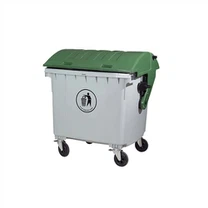
The relationship between humans and waste containers, or trash bins, may seem like a simple one-humans use them to dispose of waste. However, this seemingly straightforward interaction raises a deeper philosophical question: Do humans need waste containers, or do waste containers need humans? In this essay, I will explore both sides of this question, considering the role of waste containers in human society and the ways in which these containers depend on human existence.
From a practical standpoint, waste containers are indispensable to modern life. Humans produce a wide range of waste materials, from household trash to industrial refuse, and the need for organized, sanitary waste disposal is crucial. Waste containers provide a method of containment that prevents pollution, reduces disease transmission, and keeps living spaces clean. Without waste containers, managing the growing volume of waste generated by human activities would be chaotic, leading to environmental degradation and public health crises.
Waste containers also contribute to the broader waste management infrastructure that includes collection, transportation, recycling, and disposal. These systems are essential to maintaining urban environments, as they help prevent waste from littering the streets or contaminating natural ecosystems. Waste containers are an integral part of waste management efforts, ensuring that waste is safely handled and processed.
Moreover, waste containers serve as a reminder of humanity's responsibility to manage its consumption. The proliferation of waste bins around urban spaces highlights the ongoing challenge of minimizing waste production and finding sustainable solutions for waste management. In this sense, waste containers act as a tool for managing the consequences of human behavior, underscoring the need for responsibility and awareness in environmental matters.
On the other hand, it could be argued that waste containers "need" humans in the sense that they are inanimate objects created solely to serve human purposes. Without human existence, there would be no need for waste containers-no waste to collect or dispose of, no systems for managing trash, and no infrastructure built around the collection and disposal of refuse.
Waste containers are designed to accommodate human consumption patterns. As human activities produce waste, the demand for containers and waste management solutions rises. Therefore, waste containers are not autonomous; they exist because of the need for waste management driven by human activities. Without human societies generating waste, these containers would not have any functional purpose. They rely entirely on human existence to remain relevant.
In reality, the relationship between humans and waste containers is symbiotic. Humans need waste containers to manage waste and maintain public health, while waste containers, as inanimate objects, "exist" only to fulfill this specific human need. In this sense, neither humans nor waste containers are entirely independent in their existence. The need for waste containers is rooted in human activities, and the containers, in turn, are essential to human societies' ability to function effectively.
Ultimately, the question of whether humans need waste containers or waste containers need humans is less about determining which is more essential, and more about understanding the interdependent relationship between the two. Waste containers are a fundamental tool for managing human waste, but they exist solely because of human behavior and consumption. Their existence and utility are intertwined with human needs, and together, they form an essential part of the modern world's waste management systems. Therefore, it is not a matter of one being more necessary than the other, but rather that both humans and waste containers are mutually dependent on each other for the maintenance of public health and environmental well-being.