

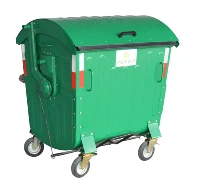

Hey there! As a supplier of 240L metal garbage bins, I often get asked about the heat dissipation performance of these bins. So, I thought I'd take a moment to share some insights on this topic.
First off, let's talk about why heat dissipation matters when it comes to garbage bins. In a nutshell, proper heat dissipation helps prevent the buildup of heat and moisture inside the bin. This is crucial because excessive heat and moisture can lead to a whole host of problems, such as the growth of mold and bacteria, unpleasant odors, and even the potential for the bin to become a fire hazard.
Now, let's dive into the heat dissipation performance of our 240L metal garbage bins. One of the key factors that affects heat dissipation is the material of the bin. Our 240L metal garbage bins are made from high - quality galvanized steel. Galvanized steel is a great choice for heat dissipation because it has good thermal conductivity. This means that it can transfer heat away from the inside of the bin relatively quickly.
Another important aspect is the design of the bin. Our 240L metal garbage bins are designed with ventilation in mind. They have small holes or vents strategically placed on the sides or bottom of the bin. These vents allow air to circulate inside the bin, which helps to carry away heat and moisture. When hot air rises inside the bin, it can escape through these vents, and cooler air can come in to replace it. This continuous air circulation is essential for maintaining a stable temperature inside the bin.
Let's compare the heat dissipation of our 240L metal garbage bin with some other sizes in our product line. For example, take a look at our 120L Galvanized Garbage Bin with Wheels. While it also has good heat dissipation properties due to the galvanized steel material and ventilation design, the smaller size means it has less volume of air and waste inside. So, the heat buildup might not be as significant as in a larger 240L bin. However, the basic principles of heat dissipation still apply.
On the other hand, our 280L Galvanized Public Garbage Bin is larger than the 240L bin. With a larger volume, there is more potential for heat to build up. But our design team has taken this into account and made sure that the ventilation system is even more robust in the 280L bin. The number and size of the vents are adjusted to ensure proper air circulation and heat dissipation.
In real - world scenarios, the heat dissipation performance of our 240L metal garbage bins has been quite impressive. For instance, in a sunny outdoor environment where the temperature can soar during the day, our 240L metal garbage bins can maintain a relatively stable internal temperature. The heat from the sun that warms up the waste inside the bin is quickly dissipated through the galvanized steel and the ventilation system.
We've also conducted some tests in a controlled environment to measure the heat dissipation. We filled the 240L metal garbage bin with waste materials and placed it in a chamber where we could control the external temperature. We monitored the temperature inside the bin over a period of time. The results showed that the temperature inside the bin increased at a much slower rate compared to a non - ventilated bin. And within a few hours, the temperature inside our bin started to stabilize as the heat was being effectively dissipated.
The heat dissipation performance of our 240L metal garbage bins also has a positive impact on the longevity of the bin. When the temperature inside the bin is kept in check, it reduces the wear and tear on the bin. For example, high temperatures can cause the metal to expand and contract, which over time can lead to cracks or damage. By having good heat dissipation, we can extend the lifespan of the bin, which is a great benefit for our customers.
Now, let's talk about how different types of waste can affect the heat dissipation. Organic waste, such as food scraps, tends to generate more heat as it decomposes. This is because the decomposition process is a chemical reaction that releases energy in the form of heat. But even with organic waste, our 240L metal garbage bins can handle the heat. The ventilation system helps to remove the heat generated by the decomposing waste, preventing the bin from overheating.
In contrast, non - organic waste like plastics or paper doesn't generate as much heat during normal storage. However, these materials can still trap heat if there is no proper ventilation. Our bins' design ensures that even with non - organic waste, heat can be effectively dissipated.
If you're considering purchasing a 240L metal garbage bin, you might be wondering how to maximize its heat dissipation performance. First, make sure to place the bin in an open area where there is good air circulation. Avoid placing it in a corner or against a wall where the air flow might be restricted. Second, keep the vents clean. Over time, dirt and debris can block the vents, which will reduce the air circulation and heat dissipation. Regularly check and clean the vents to ensure they are working properly.


In conclusion, our 240L metal garbage bins offer excellent heat dissipation performance thanks to the high - quality galvanized steel material and well - thought - out ventilation design. Whether you're using it for residential, commercial, or public purposes, you can be confident that our bins will keep the heat and moisture under control. If you're interested in learning more about our 240L Outdoor Galvanized Garbage Bin or have any questions about its heat dissipation or other features, don't hesitate to get in touch with us. We're always happy to help you make the right choice for your waste management needs.
References:
- General knowledge on thermal conductivity of galvanized steel
- In - house testing reports on heat dissipation of metal garbage bins