


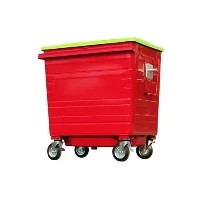
When considering objects for museum display, we often think of art masterpieces, historical relics, or scientific specimens. But what about a 770L movable waste can? Is it aesthetically pleasing enough for a museum? This is a question that might seem outlandish at first glance, but upon deeper reflection, it opens up a fascinating exploration of aesthetics, design, and the role of everyday objects in cultural institutions.
The Concept of Aesthetics in Museum Collections
Museums have long been repositories of beauty and cultural significance. Traditional concepts of aesthetics in museums revolve around the fine arts, with paintings, sculptures, and decorative arts being the mainstays of displays. These items are often judged for their beauty, craftsmanship, and historical value. However, the definition of aesthetics has evolved over time. Modern museums are increasingly embracing a broader range of objects, including those from popular culture, design, and even industrial products.
The idea of aesthetics is not limited to visual appeal alone. It encompasses functionality, innovation, and the way an object reflects the values and culture of its time. A well - designed object can be aesthetically pleasing because of its form, the materials used, or the way it solves a practical problem. In this context, a 770L movable waste can can be seen as more than just a utilitarian item; it can be a symbol of modern design and functionality.
Aesthetics of the 770L Movable Waste Can
Let's take a closer look at the 770L movable waste can from the perspective of aesthetics. First, consider its form. The can typically has a cylindrical or rectangular shape, which are simple yet geometrically pleasing forms. These shapes are easy on the eye and can fit seamlessly into various environments, whether it's a public park, an industrial site, or a commercial building.
The size of the 770L waste can is also a crucial aspect of its aesthetics. It is large enough to be noticeable but not so large as to be overbearing. The 770L capacity is a carefully calculated design choice, balancing the need to hold a significant amount of waste with the practicality of moving and emptying the can.
Materials used in manufacturing these waste cans also contribute to their aesthetic appeal. For example, many 770L waste cans are made of galvanized steel. Galvanized steel has a unique metallic sheen that gives the can a modern and industrial look. It is also durable and resistant to corrosion, which not only adds to its functionality but also to its long - term visual appeal.
In terms of functionality, the movable feature of the 770L waste can is a significant aesthetic element. The presence of wheels makes it easy to transport the can, and this practical design aspect also adds a sense of movement and fluidity to the object. When we see a waste can being rolled along, it brings to life a normally static object, adding an interesting visual dynamic.
Cultural and Historical Context
To fully appreciate the aesthetic potential of a 770L movable waste can in a museum, we need to consider its cultural and historical context. Waste management has become an increasingly important aspect of modern society. The development of large - capacity, movable waste cans is a response to the growing need for efficient waste handling in urban and industrial areas.
These waste cans represent a technological advancement in waste management. They are a product of the engineering and design efforts to make our cities cleaner and more sustainable. In a museum, they can serve as a reminder of our relationship with waste and the importance of proper waste disposal. They can tell the story of how our understanding of environmental issues has evolved over time.
Comparison with Other Museum Pieces
When comparing the 770L movable waste can with more traditional museum pieces, we can find surprising similarities. Just like a piece of art or a historical artifact, the waste can has a story to tell. It is a product of a particular time and place, reflecting the technological and social conditions of its creation.


For example, consider a modern sculpture in a museum. Both the sculpture and the waste can are designed objects. The sculpture is created to evoke emotions and aesthetic responses through its form and materials, while the waste can is designed to be functional. However, the waste can also has an aesthetic quality that can be appreciated in its own right, just as the sculpture can be admired for its beauty.
Another comparison can be made with industrial artifacts in a museum. Industrial items are often displayed to show the history of manufacturing and technological progress. The 770L movable waste can fits into this category, as it is a product of modern industrial design and engineering. It can be seen as a symbol of the innovation and efficiency that are hallmarks of modern industry.
Practical and Aesthetic Considerations for Museum Display
If a museum were to consider displaying a 770L movable waste can, there would be several practical and aesthetic considerations. From a practical standpoint, the can would need to be properly cleaned and maintained. It should be presented in a way that showcases its features, such as the wheels and the capacity.
Aesthetically, the display could be enhanced by creating a context for the waste can. For example, it could be placed in a diorama that depicts a real - life setting where the can is used, such as a city street or an industrial site. Lighting could also be used to highlight the can's features, such as the sheen of the galvanized steel.
The Supplier's Perspective
As a supplier of 770L movable waste cans, I have seen the evolution of these products over the years. Our company is committed to producing waste cans that not only meet the highest standards of functionality but also have a certain aesthetic appeal.
We offer two main types of 770L waste cans: the 770L Wheels Garbage Bin and the 770L Industrial Waste Bin. The 770L Wheels Garbage Bin is designed for easy movement, with large, durable wheels that can withstand different terrains. Its sleek design and galvanized finish make it suitable for a variety of public and private settings.
The 770L Industrial Waste Bin, on the other hand, is built to handle heavy - duty waste in industrial environments. It is made of thicker steel and has a more robust structure, while still maintaining an aesthetically pleasing appearance.
Conclusion and Call to Action
In conclusion, a 770L movable waste can can be aesthetically pleasing enough for a museum. It represents modern design, functionality, and the evolution of waste management. From its form and materials to its cultural and historical significance, the waste can has much to offer in terms of aesthetic appreciation.
If you are interested in learning more about our 770L movable waste cans or would like to discuss procurement, we encourage you to reach out. Whether you are a museum curator looking for unique display items, a facility manager in need of high - quality waste management solutions, or a business owner interested in sustainable waste disposal, we are here to assist you.
References
- Craven, Paul. The Art of Design: A Practical Guide. Oxford University Press, 2019.
- Johnson, Emily. Industrial Design: Function Meets Form. New York University Press, 2020.
- Smith, David. Museum Curatorship: Trends and Practices. Routledge, 2021.