

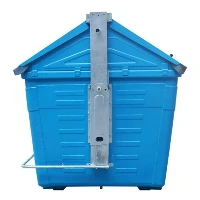

How often you should empty your garbage dustbin is a question that many individuals and businesses grapple with. As a leading garbage dustbin supplier, I've seen firsthand the impact of proper waste management on both hygiene and the environment. In this blog, I'll explore the factors that influence the frequency of dustbin emptying and provide some practical guidelines to help you make an informed decision.


Factors Affecting Emptying Frequency
Location and Usage
The location of your dustbin plays a significant role in determining how often it needs to be emptied. For instance, dustbins placed in high - traffic areas such as shopping malls, restaurants, or public parks will fill up much faster than those in less frequented locations like private offices or residential backyards. In a busy restaurant, where customers generate a large amount of food waste and packaging, the dustbin may need to be emptied multiple times a day. On the other hand, a dustbin in a small home office might only need to be emptied once or twice a week.
Type of Waste
The nature of the waste also affects the emptying frequency. Organic waste, such as food scraps, decomposes quickly and can emit unpleasant odors. This type of waste needs to be removed more frequently to prevent the growth of bacteria and the attraction of pests. In contrast, non - organic waste like paper, plastic, and metal can be stored for longer periods without causing significant issues. If your dustbin contains a high proportion of organic waste, you'll likely need to empty it more often.
Size of the Dustbin
The size of the dustbin is another crucial factor. A larger dustbin can hold more waste, so it won't need to be emptied as frequently as a smaller one. However, it's important to ensure that the size of the dustbin is appropriate for the amount of waste generated. If you choose a dustbin that is too large, it may take up unnecessary space, and if it's too small, it will fill up quickly and require frequent emptying.
Practical Guidelines for Different Settings
Residential Settings
In a typical household, a general rule of thumb is to empty the kitchen dustbin at least once a day, especially if it contains food waste. Bathrooms and bedrooms may have smaller dustbins that can be emptied 2 - 3 times a week. However, these frequencies can vary depending on the number of people living in the house and their consumption patterns. For example, a family of five will generate more waste than a single person, so they may need to empty their dustbins more often.
Commercial Settings
- Restaurants: As mentioned earlier, restaurants generate a large amount of food waste and packaging. It's advisable to empty the dustbins at least 2 - 3 times a day to maintain a clean and hygienic environment.
- Offices: In an office setting, where the waste is mainly paper, plastic, and coffee cups, the dustbins can be emptied 2 - 3 times a week. However, if there are kitchen areas or break rooms in the office, the dustbins in those areas may need to be emptied daily due to the presence of food waste.
- Retail Stores: Retail stores usually have a mix of packaging waste and some customer - generated trash. Depending on the size of the store and the volume of customers, dustbins may need to be emptied once or twice a day.
The Importance of Regular Emptying
Regularly emptying your garbage dustbin has several benefits. Firstly, it helps to prevent the growth of bacteria and the spread of diseases. When waste is left in a dustbin for too long, it can become a breeding ground for harmful microorganisms. Secondly, it reduces unpleasant odors, which can be a major nuisance in both residential and commercial settings. Thirdly, it helps to keep the surrounding area clean and tidy, which is important for the overall appearance and hygiene of the place.
Our Product Offerings
At our company, we offer a wide range of high - quality garbage dustbins to meet different needs. Whether you're looking for a Heavy Duty Metal Trash Can for industrial use, Commercial Metal Garbage Cans for business settings, or a White Steel Trash Can for a more aesthetically pleasing option in your home, we have you covered. Our dustbins are made from durable materials and are designed to withstand the rigors of daily use.
Conclusion
Determining how often to empty your garbage dustbin depends on various factors such as location, type of waste, and dustbin size. By understanding these factors and following the practical guidelines provided, you can ensure that your waste is managed effectively and efficiently. If you're in the market for a new garbage dustbin, we invite you to explore our product range. We're here to help you find the perfect solution for your waste management needs. Contact us today to start a discussion about your requirements and how we can assist you in making the right choice.
References
- Environmental Protection Agency. (2023). Waste Management Guidelines.
- World Health Organization. (2022). Hygiene and Sanitation in Waste Management.