

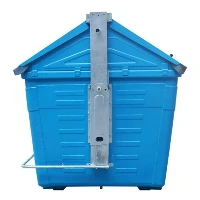

Waste management in a bus station is a critical aspect of maintaining a clean, healthy, and efficient public space. With the high volume of passengers coming and going, bus stations generate a significant amount of waste daily. As a supplier of 770L movable waste cans, I am often asked how our products compare to other waste management solutions in a bus station environment. In this blog, I will delve into the key factors and make a detailed comparison.
Capacity and Frequency of Emptying
One of the primary considerations in waste management at a bus station is the capacity of the waste containers. Traditional small - sized waste bins, usually with a capacity of less than 100L, need to be emptied very frequently. In a busy bus station, this can be a logistical nightmare. Staff have to make numerous trips to empty these bins, which not only consumes a lot of time but also requires more manpower.
Our 770L movable waste cans, on the other hand, offer a much larger capacity. This means that they can hold a substantial amount of waste before needing to be emptied. For example, during peak travel seasons when the number of passengers in a bus station can double or even triple, our 770L waste cans can handle the increased waste volume without the need for immediate emptying. The reduced frequency of emptying not only saves labor costs but also minimizes disruptions to the normal operation of the bus station.
Mobility and Placement
Mobility is another crucial factor in waste management at a bus station. Many traditional waste management solutions, such as fixed - position bins, lack the flexibility to be easily moved. This can be a problem in a dynamic environment like a bus station, where the flow of passengers and waste generation patterns can change.
Our 770L movable waste cans are equipped with wheels, which allows them to be easily repositioned as needed. For instance, if a particular area of the bus station experiences a sudden surge in passenger traffic, the waste cans can be quickly moved to that area to ensure convenient waste disposal for passengers. The 770L Wheels Garbage Bin is specifically designed to provide this mobility, making it an ideal choice for a bus station's ever - changing waste management needs.
Durability and Maintenance
Bus stations are high - traffic areas, and waste containers are often subject to rough handling. Traditional waste bins made of flimsy materials may crack, break, or rust easily, leading to additional costs for replacement and maintenance.


Our 770L waste cans are made of high - quality materials. The 770L Industrial Waste Bin is galvanized, which provides excellent corrosion resistance. This means that the waste cans can withstand the harsh conditions in a bus station, including exposure to the elements and potential impacts from luggage or other objects. The durability of our waste cans reduces the need for frequent replacements, saving long - term costs for bus station operators.
Hygiene and Odor Control
Maintaining good hygiene and controlling odors are essential in a bus station. Poor waste management can lead to the spread of diseases and an unpleasant environment for passengers.
Our 770L movable waste cans are designed with features to enhance hygiene and odor control. They have tight - fitting lids that prevent waste from spilling out and reduce the escape of odors. Additionally, the smooth interior surface of the waste cans makes them easy to clean. Regular cleaning can be carried out to prevent the build - up of dirt and bacteria, ensuring a clean and healthy environment in the bus station.
Cost - effectiveness
When comparing waste management solutions, cost - effectiveness is a major concern for bus station operators. While the initial investment in our 770L movable waste cans may be higher than that of some traditional small - sized bins, the long - term benefits far outweigh the costs.
As mentioned earlier, the larger capacity and durability of our waste cans reduce the frequency of emptying and replacement, resulting in significant savings in labor and material costs over time. Moreover, the improved hygiene and odor control can enhance the overall image of the bus station, potentially attracting more passengers and increasing revenue.
Environmental Impact
In today's world, environmental sustainability is a growing concern. Our 770L movable waste cans are designed with environmental considerations in mind. The galvanized material used in the manufacturing process is recyclable, which reduces the environmental impact at the end of the product's life cycle.
Furthermore, by efficiently managing waste in the bus station, our waste cans can contribute to a more sustainable waste management system. For example, the larger capacity allows for more efficient collection and transportation of waste, reducing the carbon footprint associated with multiple trips to empty smaller bins.
Conclusion
In conclusion, our 770L movable waste cans offer several advantages over other waste management solutions in a bus station. Their large capacity, mobility, durability, hygiene features, cost - effectiveness, and positive environmental impact make them an ideal choice for bus station operators.
If you are a bus station manager or involved in waste management in a similar public transportation facility, I encourage you to consider our 770L movable waste cans for your waste management needs. Contact us to discuss how our products can be customized to fit your specific requirements and to start a procurement negotiation.
References
- Waste Management Best Practices in Public Transportation Facilities, Journal of Urban Sanitation, 2020
- The Impact of Container Capacity on Waste Collection Efficiency, International Journal of Solid Waste Management, 2019
- Sustainable Waste Management in High - Traffic Areas, Environmental Science and Technology Review, 2021