

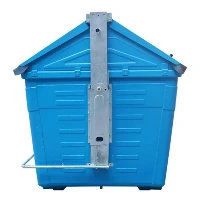

Outdoor plastic garbage bins are a common sight in public areas, parks, streets, and residential settings. They play a crucial role in keeping our surroundings clean by providing a designated place to dispose of waste. However, a question that often arises is whether these outdoor plastic garbage bins attract pests. As a supplier of high - quality outdoor plastic garbage bins, including the Outdoor Colorful Plastic Trash Can, 360L Wheels Outdoor Plastic Garbage Container, and 660L Big Size Outdoor Plastic Garbage Container, I am well - positioned to explore this topic.
The Nature of Pests and Their Attractions
Pests are organisms that are considered a nuisance or a threat to human health, property, or the environment. Common pests around outdoor garbage bins include rodents like rats and mice, insects such as flies, cockroaches, and ants, and even larger animals like raccoons and seagulls in some areas. These pests are primarily attracted to garbage bins because of the potential food sources they offer.
Food waste is a major culprit. When garbage is left exposed in outdoor bins, the smell of decaying food can travel significant distances, luring pests from their hiding places. For example, rodents have an excellent sense of smell and can detect food from afar. Flies are also attracted to the odors of organic matter, especially when it starts to break down. The sweet and fatty substances in food waste act as powerful attractants for these pests.
How Outdoor Plastic Garbage Bins Can Potentially Attract Pests
One of the main reasons outdoor plastic garbage bins can attract pests is poor waste management. If users do not properly seal their trash bags before placing them in the bin, the contents can be easily accessible to pests. Even small openings in bags can allow pests, such as ants, to get inside and start foraging.
Another factor is the frequency of bin emptying. Infrequently emptied bins can accumulate large amounts of waste over time. This not only increases the likelihood of spills and leaks but also allows the waste to decompose further, creating stronger odors that attract pests. In addition, if the bins are not cleaned regularly, residue from previous waste can build up inside the bin, serving as a continuous attractant for pests.
The design of the outdoor plastic garbage bin can also play a role. For instance, if a bin has a loose - fitting lid, pests may be able to lift it easily and gain access to the garbage. Some bins with wide openings or no proper closing mechanisms are more vulnerable to pest intrusion.


Our Products' Features to Deter Pests
At our company, we understand the importance of designing outdoor plastic garbage bins that can minimize pest attraction. Our Outdoor Colorful Plastic Trash Can is designed with a tight - fitting lid. This helps to contain the odors inside the bin, reducing the chances of attracting pests from afar. The lid is also made of a sturdy plastic material that is difficult for pests like rodents to gnaw through.
The 360L Wheels Outdoor Plastic Garbage Container comes with a locking mechanism. This feature ensures that the bin remains closed and secure, preventing pests such as raccoons and seagulls from opening the lid and rummaging through the trash. The wheels on this container also make it easier to move the bin for regular cleaning and emptying, which is essential for pest control.
Our 660L Big Size Outdoor Plastic Garbage Container is constructed with a smooth interior surface. This makes it difficult for pests to cling onto the sides of the bin and reach the garbage. The large capacity of this bin also means that it can accommodate a significant amount of waste without the need for frequent emptying, as long as the waste is properly managed.
Proper Use and Maintenance to Prevent Pest Attraction
Even with well - designed bins, proper use and maintenance are crucial to prevent pest attraction. For users, it is important to always use high - quality trash bags and seal them tightly before placing them in the bin. Avoid overfilling the bin, as this can cause the lid to not close properly.
Regular cleaning of the bins is essential. Use a mild detergent and water to wash the inside and outside of the bin periodically. This will remove any food residue or odors that could attract pests. Additionally, choose a suitable location for the outdoor plastic garbage bin. Avoid placing it near areas where pests are known to hide, such as dense bushes or overgrown grass.
Scientific Studies on Pest Attraction to Garbage Bins
Numerous scientific studies have been conducted on the relationship between garbage bins and pest attraction. Research has shown that the type of waste, especially the presence of food waste, is a major determinant of pest activity around garbage bins. For example, a study published in the "Journal of Environmental Health" found that bins containing a high proportion of food waste had significantly higher levels of rodent and insect activity compared to bins with mainly non - food waste.
Another study focused on the role of bin design. It revealed that well - designed bins with proper lids and locking mechanisms could reduce pest intrusion by up to 70%. These scientific findings highlight the importance of both waste management and bin design in preventing pest problems.
Conclusion and Call to Action
In conclusion, while outdoor plastic garbage bins can potentially attract pests, proper design, use, and maintenance can significantly reduce this risk. Our range of outdoor plastic garbage bins, including the Outdoor Colorful Plastic Trash Can, 360L Wheels Outdoor Plastic Garbage Container, and 660L Big Size Outdoor Plastic Garbage Container, is engineered to minimize pest attraction.
If you are in the market for high - quality outdoor plastic garbage bins that can help you keep your surroundings clean and pest - free, we invite you to contact us for a detailed discussion. Our team of experts is ready to assist you in choosing the right products for your specific needs.
References
- Journal of Environmental Health, [Title of relevant study], [Volume], [Year]
- [Another scientific journal], [Title of relevant study], [Volume], [Year]