


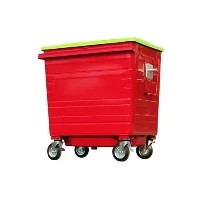
As a supplier of outdoor public garbage bins, I often encounter questions from clients about the portability of these essential pieces of urban infrastructure. The ability to move outdoor public garbage bins easily is a crucial factor that impacts their practicality, maintenance, and overall effectiveness in waste management. In this blog post, I will explore the various aspects related to the ease of moving outdoor public garbage bins, considering factors such as bin design, size, weight, and the presence of wheels.
Design and Structure
The design of an outdoor public garbage bin plays a significant role in determining its portability. Modern garbage bins are engineered with a focus on functionality and ease of use. For instance, many of our products, like the 240L Outdoor Galvanized Garbage Bin, are constructed with a sturdy yet lightweight frame. The use of galvanized steel not only provides durability against the elements but also helps in keeping the overall weight of the bin manageable.
Bins with a well - balanced design are easier to move. A proper distribution of weight ensures that the bin does not tip over easily during transportation. Additionally, some bins are designed with ergonomic handles or grips. These features allow sanitation workers or maintenance staff to hold the bin securely while moving it, reducing the risk of injury and making the process more efficient.
Size and Capacity
The size and capacity of an outdoor public garbage bin are directly related to its portability. Smaller bins, such as the 120L Galvanized Garbage Bin with Wheels, are generally easier to move compared to larger ones. A 120 - liter bin is lightweight enough to be carried by one person, especially when it is empty. This makes it ideal for areas with limited waste generation or for temporary use.
On the other hand, larger bins like the 240L Galvanized Metal Garbage Bin offer higher capacity but can be more challenging to move. However, advancements in bin design have addressed this issue. Many 240 - liter bins are now equipped with features that enhance their portability, such as reinforced frames and smooth - rolling wheels.
Weight Considerations
The weight of an outdoor public garbage bin is a critical factor in determining how easily it can be moved. The weight can be influenced by several factors, including the material of construction, the size of the bin, and whether it is empty or full.
Empty bins are obviously easier to move than full ones. When a bin is filled with waste, its weight can increase significantly, especially if the waste is heavy or dense. For example, a bin filled with glass bottles or construction debris will be much heavier than one filled with paper or plastic. To address this issue, some bins are designed with internal compartments or liners that can be removed and emptied separately, reducing the overall weight of the bin during transportation.
The Role of Wheels
Wheels are one of the most important features that can enhance the portability of outdoor public garbage bins. Bins with wheels, like the 120L Galvanized Garbage Bin with Wheels mentioned earlier, can be rolled easily from one location to another. This is particularly useful in areas where the bin needs to be moved frequently, such as in parks, shopping malls, or along sidewalks.
The quality of the wheels also matters. High - quality wheels are designed to withstand heavy loads and rough surfaces. They should be made of durable materials and have a smooth rolling mechanism. Some wheels are also equipped with brakes, which can be engaged to keep the bin in place once it has been moved to its desired location.
Environmental and Site - Specific Considerations
The ease of moving outdoor public garbage bins can also be affected by the environment and the specific site where they are located. In areas with uneven terrain, such as hilly parks or unpaved paths, moving bins can be more challenging. In such cases, bins with larger, more robust wheels or those that are specifically designed for rough terrain may be required.
In addition, extreme weather conditions can also impact the portability of bins. In cold weather, ice and snow can make the ground slippery, increasing the risk of the bin slipping or tipping over during transportation. In hot and humid climates, the materials of the bin may expand or contract, which can affect its structural integrity and ease of movement.
Maintenance and Long - Term Portability
Regular maintenance is essential to ensure that outdoor public garbage bins remain easy to move over time. This includes checking the wheels for wear and tear, lubricating moving parts, and inspecting the bin for any signs of damage. A well - maintained bin is not only easier to move but also has a longer lifespan, reducing the need for frequent replacements.
It is also important to train the staff responsible for moving the bins. Proper handling techniques can minimize the risk of injury and ensure that the bins are moved safely and efficiently. This includes using the correct lifting and pushing techniques and avoiding overloading the bins.


Conclusion
In conclusion, the ease of moving outdoor public garbage bins depends on a variety of factors, including design, size, weight, the presence of wheels, environmental conditions, and maintenance. As a supplier, we understand the importance of providing bins that are not only durable and functional but also easy to move. Our range of products, such as the 240L Outdoor Galvanized Garbage Bin, 120L Galvanized Garbage Bin with Wheels, and 240L Galvanized Metal Garbage Bin, are designed with these factors in mind.
If you are in the market for outdoor public garbage bins and would like to discuss your specific requirements, we invite you to contact us for a detailed consultation. We can help you select the right bin for your needs, taking into account factors such as portability, capacity, and budget. Our team of experts is ready to assist you in making an informed decision.
References
- Municipal Solid Waste Management Guidelines. Department of Environmental Protection.
- Best Practices in Outdoor Garbage Bin Design. International Journal of Urban Infrastructure.
- Ergonomics in Waste Handling Equipment. Journal of Occupational Safety and Health.