


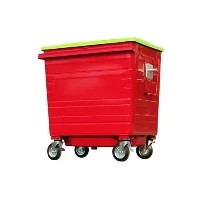
Galvanized trash cans have become a popular choice for waste management in both residential and commercial settings due to their durability and resistance to corrosion. One question that often arises is whether these trash cans are fire-resistant. As a supplier of high-quality galvanized trash cans, I'm here to provide a detailed analysis of this topic.
Understanding Galvanization
Before delving into the fire-resistant properties of galvanized trash cans, it's essential to understand what galvanization is. Galvanization is a process of applying a protective zinc coating to steel or iron to prevent rusting. The zinc coating acts as a barrier between the metal and the environment, protecting it from oxidation and corrosion. This process significantly extends the lifespan of the metal, making it ideal for outdoor use, where exposure to moisture and harsh weather conditions is common.
The Fire-Resistant Properties of Galvanized Trash Cans
When it comes to fire resistance, it's important to distinguish between fireproof and fire-resistant. Fireproof materials are those that cannot burn, while fire-resistant materials can withstand fire for a certain period without catching fire or spreading flames. Galvanized trash cans are not fireproof, but they do possess some fire-resistant properties.
The zinc coating on galvanized trash cans has a relatively high melting point of about 419.5°C (787.1°F). This means that in the event of a fire, the zinc coating will not immediately melt or catch fire. Instead, it will act as a protective layer, slowing down the transfer of heat to the underlying steel or iron. This can buy some time in a fire situation, preventing the trash can from quickly becoming a fuel source and potentially spreading the fire.
However, it's important to note that the fire-resistant properties of galvanized trash cans have their limits. If exposed to extremely high temperatures for an extended period, the zinc coating will eventually melt, and the underlying metal will start to heat up. Once the metal reaches its ignition point, it can catch fire and contribute to the spread of the blaze.
Factors Affecting Fire Resistance
Several factors can affect the fire-resistant properties of galvanized trash cans:
- Thickness of the Zinc Coating: A thicker zinc coating will provide better protection and take longer to melt in a fire. High-quality galvanized trash cans typically have a thicker coating, which enhances their fire resistance.
- Type of Waste in the Trash Can: The contents of the trash can play a significant role in its fire behavior. If the trash can is filled with highly flammable materials such as paper, cardboard, or gasoline, it will be more likely to catch fire and burn quickly, regardless of the fire-resistant properties of the can itself.
- Duration and Intensity of the Fire: A short-lived, low-intensity fire may not cause significant damage to a galvanized trash can, while a long-lasting, high-intensity fire can quickly overcome its fire-resistant properties.
Practical Applications and Considerations
In many practical applications, the fire-resistant properties of galvanized trash cans can be beneficial. For example, in outdoor areas where there is a risk of small fires, such as campgrounds or picnic areas, galvanized trash cans can provide a safer option for waste disposal. They can also be used in industrial settings, where there is a risk of sparks or small fires.


However, it's important to use galvanized trash cans in conjunction with other fire safety measures. This may include keeping trash cans away from potential ignition sources, ensuring proper ventilation, and having fire extinguishers readily available. In high-risk areas, additional fire protection measures, such as fireproof enclosures or sprinkler systems, may be necessary.
Our Galvanized Trash Can Products
As a leading supplier of galvanized trash cans, we offer a wide range of products to meet the diverse needs of our customers. Our 120L Galvanized Garbage Bin with Wheels is a popular choice for residential and commercial use. It features a durable galvanized steel construction, a leak-proof design, and convenient wheels for easy mobility.
For larger waste disposal needs, we also offer the 240L Outdoor Galvanized Garbage Bin and the 240L Galvanized Metal Garbage Bin. These larger bins are ideal for outdoor areas, such as parks, schools, and industrial sites. They are built to withstand heavy use and harsh weather conditions, and their galvanized coating provides excellent corrosion and fire resistance.
Conclusion
In conclusion, while galvanized trash cans are not fireproof, they do offer some fire-resistant properties. The zinc coating on these trash cans can slow down the transfer of heat and prevent the can from quickly becoming a fuel source in a fire. However, their fire resistance has its limits, and it's important to use them in conjunction with other fire safety measures.
If you're in the market for high-quality galvanized trash cans, we invite you to explore our product range. Our team of experts is available to answer any questions you may have and help you choose the right trash cans for your specific needs. Whether you're a homeowner, a business owner, or a facility manager, we can provide you with the best waste management solutions. Contact us today to discuss your requirements and start a procurement negotiation.
References
- "Galvanizing - The Zinc Association." The Zinc Association. Accessed [Date].
- "Fire Resistance of Building Materials and Structures." National Fire Protection Association. Accessed [Date].