

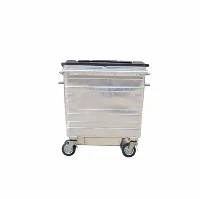

As a supplier of galvanized trash cans, I often get asked if these bins are affected by saltwater. It's a valid question, especially for those who live near the coast or in areas where de - icing salts are used during winter. In this blog, I'll share some insights on how saltwater impacts galvanized trash cans.
How Galvanization Works
First, let's talk about what galvanization is. Galvanizing is a process where a protective zinc coating is applied to steel or iron to prevent rusting. The zinc acts as a sacrificial anode, meaning it corrodes before the underlying metal. This provides a long - lasting layer of protection, and that's why galvanized trash cans are so popular. They're durable and can withstand a lot of wear and tear.
Saltwater and Galvanized Trash Cans
Saltwater contains a high concentration of salt (sodium chloride) and other minerals. When a galvanized trash can comes into contact with saltwater, a chemical reaction occurs. The saltwater can speed up the corrosion process of the zinc coating.
The zinc in the galvanized layer reacts with the oxygen and water in the saltwater to form zinc hydroxide and zinc carbonate. These compounds create a white, powdery substance on the surface of the trash can. While this might not look great, it's actually a sign that the zinc is doing its job. It's sacrificing itself to protect the underlying steel.
However, if the saltwater exposure is prolonged or the trash can is in a highly corrosive environment, the zinc coating will eventually wear away. Once the zinc is gone, the steel or iron beneath is exposed to the saltwater, and that's when rust starts to form. Rust can weaken the structure of the trash can, making it less durable and potentially causing it to leak or break.


Factors Affecting Corrosion
There are several factors that can influence how saltwater affects galvanized trash cans:
- Exposure time: The longer the trash can is in contact with saltwater, the more likely it is to corrode. For example, if a trash can is placed near the ocean and is constantly splashed by saltwater waves, it will corrode faster than one that only gets occasional exposure.
- Concentration of salt: Higher salt concentrations in the water will increase the rate of corrosion. In areas where de - icing salts are used on roads, the runoff water can have a high salt content, which can be harmful to galvanized trash cans.
- Temperature: Higher temperatures can accelerate the corrosion process. Warmer water contains more dissolved oxygen, which reacts with the zinc and speeds up the formation of corrosion products.
Our Galvanized Trash Can Offerings
We offer a range of galvanized trash cans that are designed to handle different environments.
If you're looking for a large - capacity option for outdoor use, check out our 240L Outdoor Galvanized Garbage Bin. It's sturdy and can hold a significant amount of waste.
For more mobility, our 120L Galvanized Garbage Bin with Wheels is a great choice. You can easily move it around your property or workplace.
And if you need a trash can for public areas, our 280L Galvanized Public Garbage Bin is built to withstand heavy use.
Protecting Galvanized Trash Cans from Saltwater
If you're using galvanized trash cans in a saltwater - prone area, there are some steps you can take to protect them:
- Regular cleaning: Wash the trash cans with fresh water to remove salt and other debris. This can slow down the corrosion process.
- Apply a protective coating: There are special coatings available that can provide an extra layer of protection against saltwater. You can ask us about these coatings when you're considering a purchase.
- Proper placement: Try to place the trash cans in areas where they're less likely to be exposed to saltwater. For example, if you're near the ocean, place them a bit further inland.
Conclusion
So, to answer the question, yes, galvanized trash cans are affected by saltwater. But with proper care and maintenance, they can still last a long time. Our galvanized trash cans are made with high - quality materials and a thick zinc coating, which gives them a good level of resistance to saltwater corrosion.
If you're in the market for galvanized trash cans and want to learn more about how they can perform in your specific environment, don't hesitate to reach out. We're here to help you make the right choice for your waste management needs. Whether you need a single trash can for your home or a large order for a commercial or public project, we've got you covered.
References
- "Corrosion of Galvanized Steel in Marine Environments", Journal of Corrosion Science
- "The Effects of Saltwater on Metal Surfaces", Metals and Materials Research Journal