

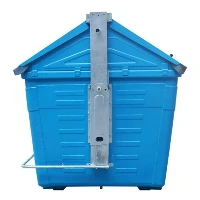

Are 120L trash bins with wheels resistant to chemicals?
As a supplier of 120L trash bins with wheels, I often get asked about the chemical resistance of our products. This is a crucial question, especially for industries and facilities that deal with various types of waste, some of which may contain potentially harmful chemicals. In this blog, I'll delve into the factors that determine the chemical resistance of our 120L trash bins with wheels, and provide insights based on scientific knowledge and practical experience.
Understanding Chemical Resistance
Chemical resistance refers to the ability of a material to withstand the effects of chemical substances without significant degradation. When it comes to trash bins, chemical resistance is important because it ensures the longevity of the bin and prevents leaks or contamination that could pose risks to the environment and human health.
Materials Used in 120L Trash Bins with Wheels
Our 120L trash bins with wheels are typically made from high - density polyethylene (HDPE) or galvanized steel. Each material has its own characteristics in terms of chemical resistance.
High - Density Polyethylene (HDPE)
HDPE is a popular choice for trash bins due to its durability, lightweight nature, and relatively good chemical resistance. It is a thermoplastic polymer that is resistant to many common chemicals, such as acids, alkalis, and salts at low to moderate concentrations.
- Acids: HDPE can withstand weak to moderately strong acids. For example, it can resist acetic acid, which is commonly found in household vinegar, as well as dilute sulfuric acid. However, it may be attacked by concentrated strong acids over time.
- Alkalis: It also shows good resistance to alkalis. Sodium hydroxide solutions at low to medium concentrations do not cause significant damage to HDPE. This makes it suitable for use in environments where alkaline waste may be present, such as in some industrial cleaning processes.
- Organic solvents: HDPE has limited resistance to some organic solvents. Solvents like benzene, toluene, and chloroform can cause swelling or even dissolution of HDPE over time. Therefore, if the trash bin is likely to come into contact with these solvents, special precautions or alternative materials may be required.
Galvanized Steel
Galvanized steel is another material used in our trash bins. It consists of a steel core coated with a layer of zinc to prevent corrosion.
- General chemical resistance: The zinc coating provides a certain level of protection against many chemicals. It can resist the effects of moisture and some mild acids and alkalis. For example, it can withstand exposure to rainwater and some weak acidic solutions in the atmosphere.
- Long - term exposure: However, in the presence of strong acids or alkalis, the zinc coating may gradually corrode, and the underlying steel may be exposed. Once the steel is exposed, it is more susceptible to rust and further chemical attack.
Factors Affecting Chemical Resistance
Several factors can affect the chemical resistance of our 120L trash bins with wheels.
Concentration of chemicals
The concentration of the chemical substance is a critical factor. Higher concentrations of chemicals are more likely to cause damage to the trash bin material. For example, a dilute solution of hydrochloric acid may not have a significant impact on an HDPE bin, but a concentrated solution can cause the plastic to degrade.
Temperature
Temperature also plays a role. Higher temperatures generally accelerate chemical reactions. If a trash bin is exposed to chemicals at elevated temperatures, the rate of degradation may increase. For instance, HDPE may become more susceptible to chemical attack when heated.
Duration of exposure
The longer the trash bin is exposed to a chemical substance, the greater the chance of damage. Even if a bin is resistant to a particular chemical in the short term, prolonged exposure can lead to cumulative effects and eventually cause failure.
Testing for Chemical Resistance
To ensure the quality and performance of our 120L trash bins with wheels, we conduct various tests for chemical resistance.
- Immersion tests: We immerse samples of the bin materials in different chemical solutions for a specified period at a controlled temperature. After the immersion period, we examine the samples for any signs of swelling, discoloration, or loss of mechanical properties.
- Field testing: In addition to laboratory tests, we also carry out field testing in real - world environments. This allows us to observe how the bins perform under actual conditions of use, including exposure to different chemicals and environmental factors.
Applications and Chemical Resistance Requirements
The chemical resistance requirements of our 120L trash bins with wheels vary depending on the application.


- Household use: In a household setting, the trash bins are mainly exposed to common household waste, such as food scraps, paper, and some cleaning products. HDPE bins are generally sufficient for this purpose, as they can resist the mild chemicals found in household waste.
- Industrial use: In industrial settings, the requirements are much more stringent. Industries that deal with chemicals, such as chemical manufacturing plants or laboratories, need trash bins with high chemical resistance. Galvanized steel bins may be suitable for some industrial applications, but in cases where there is a high risk of exposure to strong chemicals, special - purpose bins made from more chemically resistant materials may be required.
Our Product Range
We offer a wide range of trash bins to meet different needs. In addition to our standard 120L trash bins with wheels, we also have other sizes and types of galvanized garbage bins. For example, you can check out our 120L Galvanized Garbage Bin with Wheels, 280L Galvanized Public Garbage Bin, and 240L Outdoor Galvanized Garbage Bin.
Conclusion and Call to Action
In conclusion, the chemical resistance of our 120L trash bins with wheels depends on the material used, the concentration and type of chemicals, temperature, and duration of exposure. We take great care in selecting materials and conducting tests to ensure that our bins can meet the chemical resistance requirements of different applications.
If you are in the market for high - quality trash bins and have specific chemical resistance needs, we are here to help. Our team of experts can provide you with detailed information and guidance on choosing the right product for your situation. Contact us to start a procurement discussion, and let us work together to find the best solution for your waste management needs.
References
- "Plastics in Packaging: Properties, Processing, Applications and Regulations" by A. L. Brody and K. S. Marsh
- "Corrosion and Protection of Metals" by R. Winston Revie